
Rice and grains milling solutions defined around the actual raw material, required output, plant layout and the production stages confirmed for the project.
Rice and grains milling projects should be defined as complete process requirements rather than selected from a generic machine description. The raw material, required output, available factory space, surrounding equipment and the stages included within the agreed supply scope all influence the final project configuration.
ASIBEX reviews the available project information during the RFQ stage before the detailed technical brief is finalized. Because the approved project documents require alignment with the actual machinery suppliers, detailed machine types and process stages should only be confirmed after that supplier review.
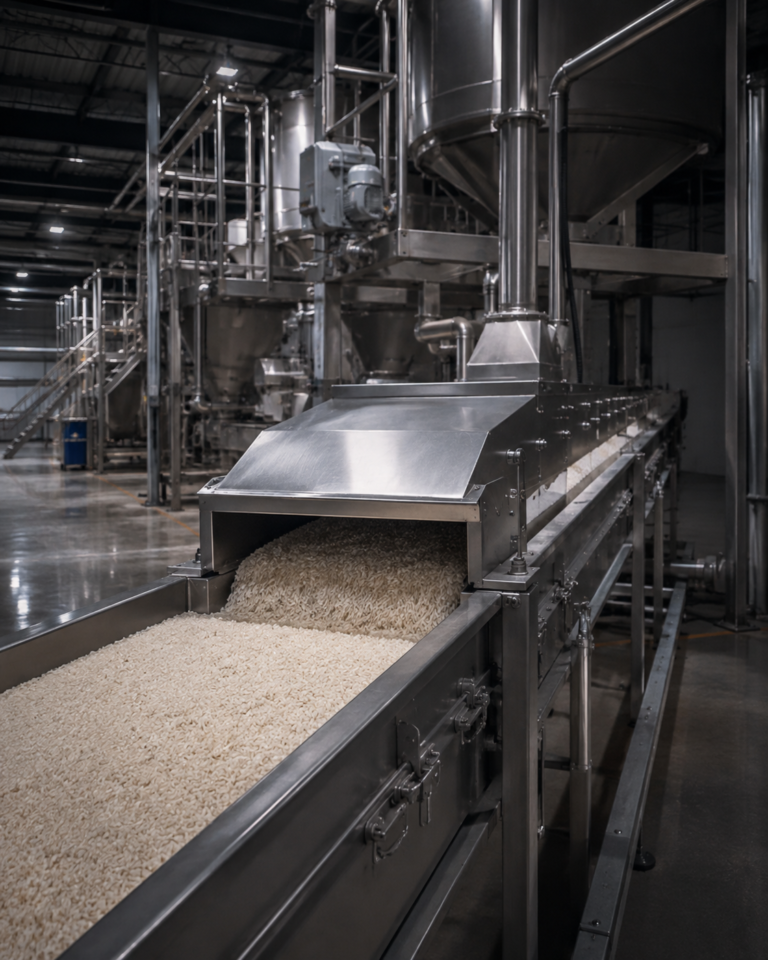
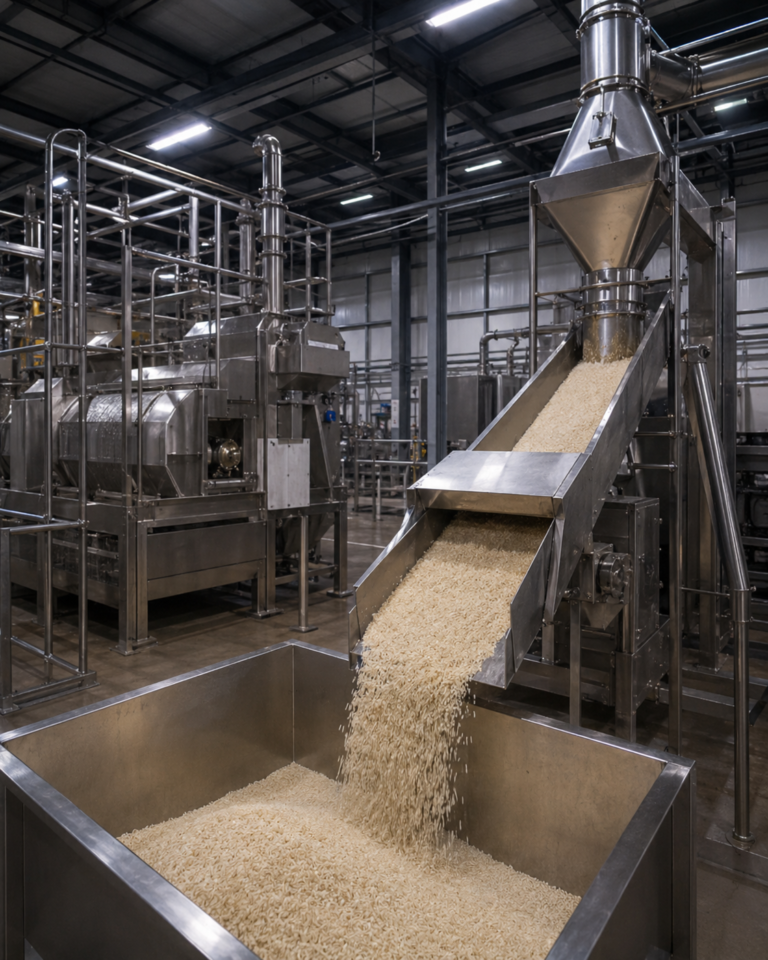
The approved scope covers rice milling and grains milling as technical service applications. The detailed line configuration is not yet approved for publication and should be aligned with the actual machinery supplier before specific process stages or equipment types are presented on the website.
The final project scope should therefore be based on the actual raw material, production requirement, site conditions, existing or planned equipment and the supply boundary agreed during technical review.
Detailed milling-line architecture should be confirmed against the machinery supplier selected for the project. This includes the exact process stages, equipment sequence, utilities, capacity and integration requirements that apply to the proposed line.
Until that technical alignment is completed, the website should present the service at project level and avoid publishing unsupported machine specifications or process claims.
To review the project, provide the raw material to be processed, required production capacity, project country, available factory layout, existing or planned equipment, project stage and any technical information already available from the customer or machinery supplier.
Until that technical alignment is completed, the website should present the service at project level and avoid publishing unsupported machine specifications or process claims.
Where included within the agreed project scope, ASIBEX can support installation, commissioning and relevant operator or technical training for the supplied milling equipment. The final responsibilities and interfaces should be confirmed after the equipment and line configuration have been aligned with the selected machinery supplier.
After commissioning, technical and after-sales support is linked to the supplied equipment and the applicable project terms. No fixed warranty period, response time or service-level commitment is stated here because these details have not been provided as approved publication data.
The final configuration is defined after reviewing the raw material, required output, factory layout, project requirements and the machinery supplier proposed for the project. Detailed equipment stages should not be assumed before this technical review is completed.
FOO-013 is approved for regional project targeting. The final commercial and technical scope should be confirmed through the RFQ for the specific project country.
Provide the raw material, required production capacity, project country, available layout, current or planned equipment, project stage and any technical information already available from the customer or machinery supplier.
Share your raw material, required output, project location and available technical information so our engineering team can review the project scope before quotation.